

AUTO AUCTION

AUTO AUCTION

What is an Auto Auction Venue?

It is a membership-based **automobile bidding market** where businesses engaged in the sale and purchase of automobiles sell vehicles for trade.

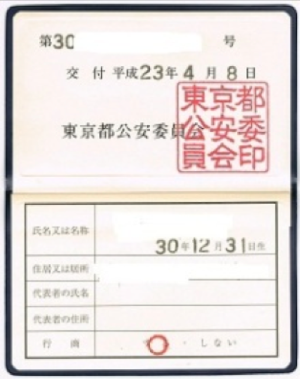
Auto auctions are limited to businesses with an **antique dealer license** and are **not open to general consumers**.

There are over 150 venues across Japan, and auctions are held weekly.

Minimum Requirements for Registering at an Auto Auction

A business possessing an **Antique Dealer License**

A business that has **permanent exhibition space/
maintenance shop** and sells vehicles

A business that has obtained an **Invoice Number**

Only those who meet the above can trade.

※General users are not permitted to participate

The Significance of Auto Auction Venues

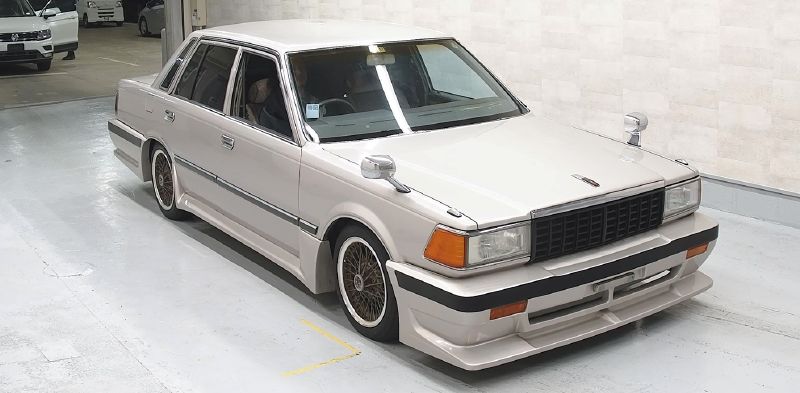
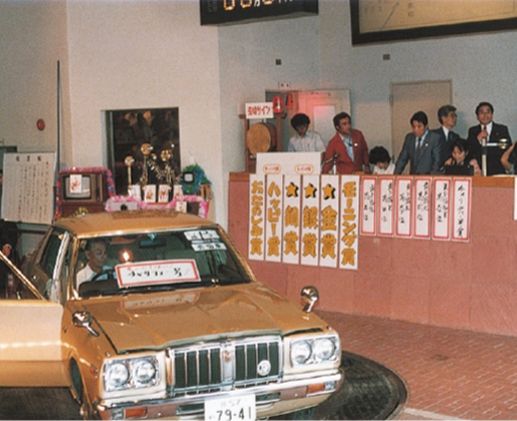
Initial Stage | The first auction held in 1967 by the current Toyota U-Zec Co., Ltd.

In an era before the internet, when automobiles had widely spread into society and among the public and began to become necessities, they emerged as a way to sell increased **trade-in vehicles**—a byproduct of new car sales—and **excess dealer inventory**. This formed the used car market.

1983 Cedric

Current Situation

The internet has become widespread, making peer-to-peer sales possible, but we often hear of the following problems occurring in transactions between individuals who lack knowledge:

1. Incomplete documentation for transfer of ownership
2. Accident vehicles/vehicles with repair history

I believe peer-to-peer sales are convenient and fine for individuals with car knowledge operating under personal responsibility.
For those with little or no car knowledge, it is safest to entrust the sale to a reliable person or dealer.
Auto auction venues exist for transactions between businesses (dealers) and are attended by many overseas buyers.

Points for General Users to Note When Selling a Car | What are Accident-Damaged Vehicles and Vehicles with Repair History?

Even a car that looks clean may have been in an accident and repaired.
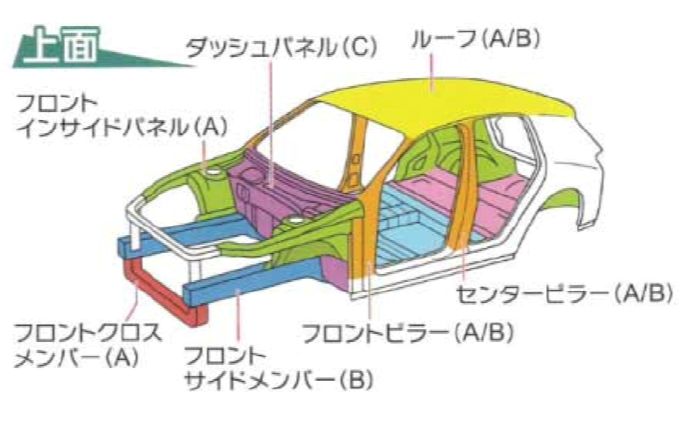
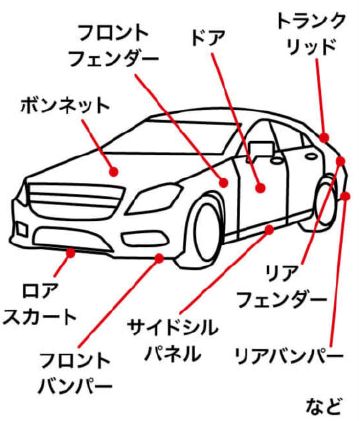
Since **a car with damage or repair history to its structural components has low value**, the exhibiting dealer has an obligation to declare it at the AA.
It is difficult for general users to determine whether a car has a **"repair history (accident car)"** or not.
In most cases, users only realize their car is considered an accident vehicle when they try to sell it, and by then, too much time has passed, leaving them with no option but to accept the loss. If you bought the car through a peer-to-peer sale, we recommend having a trustworthy person check it as soon as possible.

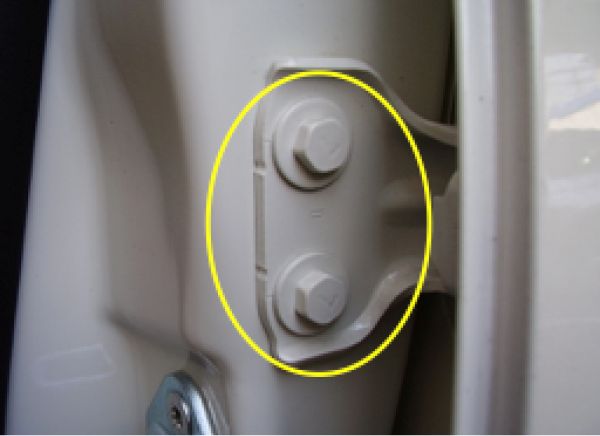
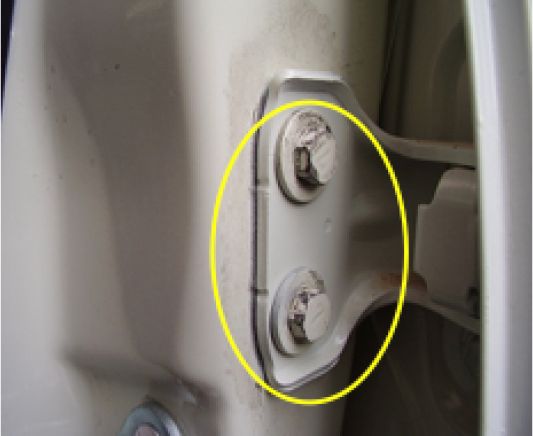
If there are signs that a screw has been removed during a repair, the car may have been in an accident.
It may not always be an accident, so be sure to check the circumstances before concluding.

What are Accident-Damaged Vehicles and Vehicles with Repair History?

■Damage or repair history to structural components = Low value

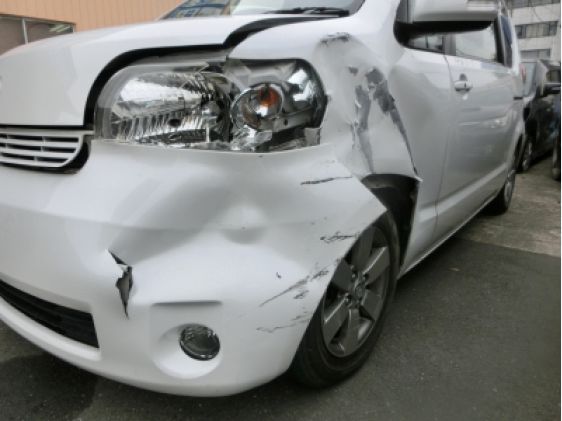
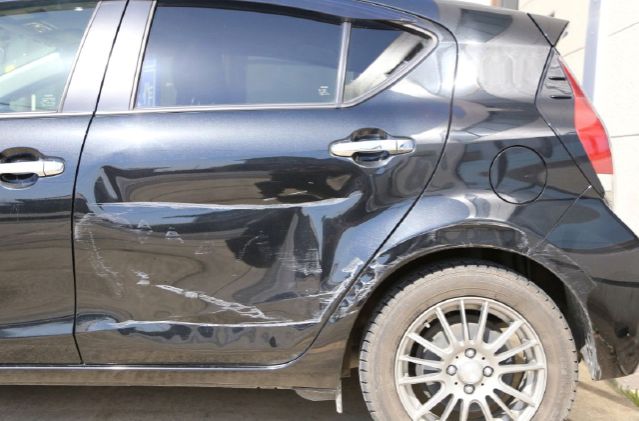
Damage of this extent likely involves damage to structural components such as the front inner panel or front side member.

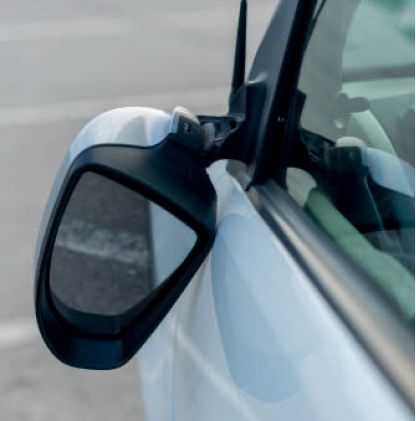
■Scratches on the exterior panels do not make it an accident car = Higher value than accident-damaged/repaired vehicles

A broken mirror is considered exterior damage.
The photo on the right is likely only exterior damage, but a detailed inspection is required for a final judgment.

History of Bay auc and Auction Systems

The first automobile auction was held in 1967 and was initially held irregularly as a manual bidding system.
Imagine the tuna or crab auctions at a fishing port.
The conductor and prospective buyers communicate using specialized "gestures" and "words" during the bidding.
Bay auc (then the Osaka Nanko Used Car Cooperative) held its first auction in 1978. The photo on the left shows our company building at that time.
There was a lot of excitement with every successful bid.
Manual bidding from 1978-84
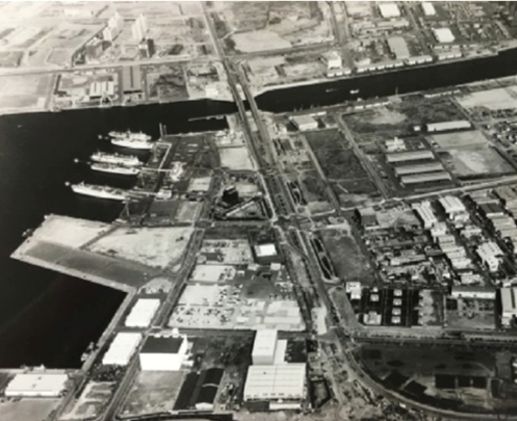
Aerial photo of Nanko around 1978
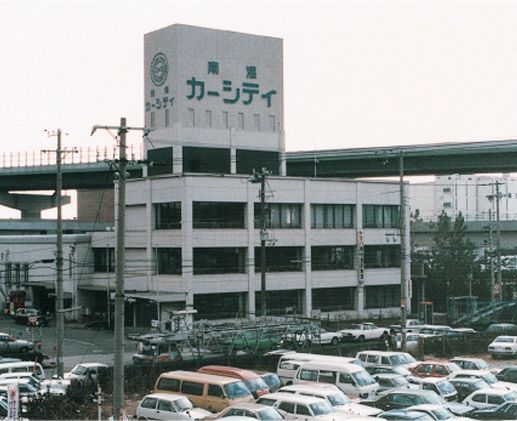
Around 1982, Nanko Car City was established, allowing more people to participate in the auction.

This photo, taken about four years after the previous one in 1984, shows the introduction of the POS system.

The exhibited vehicles are still conducted using the "**vehicle parading method**," where they pass in front of the bidding seats (hereafter, POS seats).
Bidding is done while physically observing the vehicle's movement, exhaust gas condition, color, etc.

As the number of listed vehicles increased with manual bidding, the processing capacity of the auctioneers became limited. Auctions took a long time from start to finish, and late at night, fatigue led to missed bid calls and disruptions in the bidding process.
For the bidders, too, since they could recognize the faces of other dealers who were bidding, friction with competitors arose, and there were problems where they were reluctant to bid on a desired car if a familiar dealer was competing.

Due to this background and technological innovation, the computer-based **POS system** was introduced.

Bay auc (then ONAA) built a new venue with the POS system and a multi-story parking garage north of the manual bidding venue, allowing more vehicles to be auctioned.
However, since the internet was not yet widespread, only those who came to the venue could participate in the bidding, and the number of attendees from all over West Japan increased year by year.
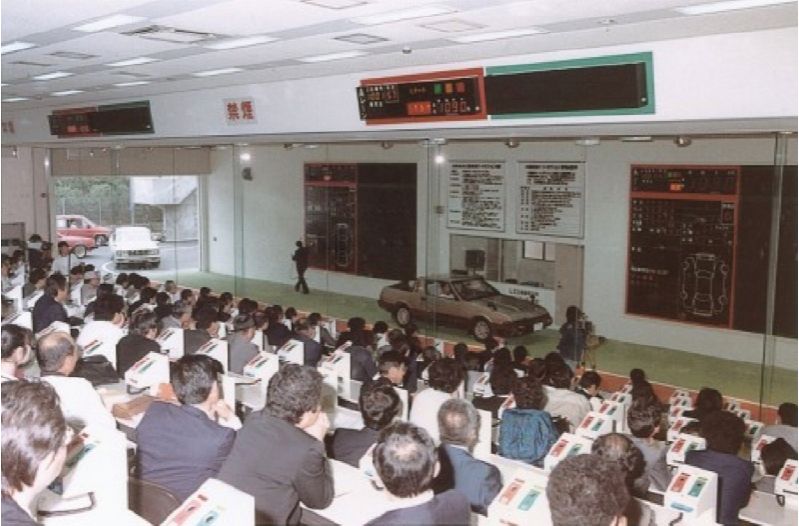
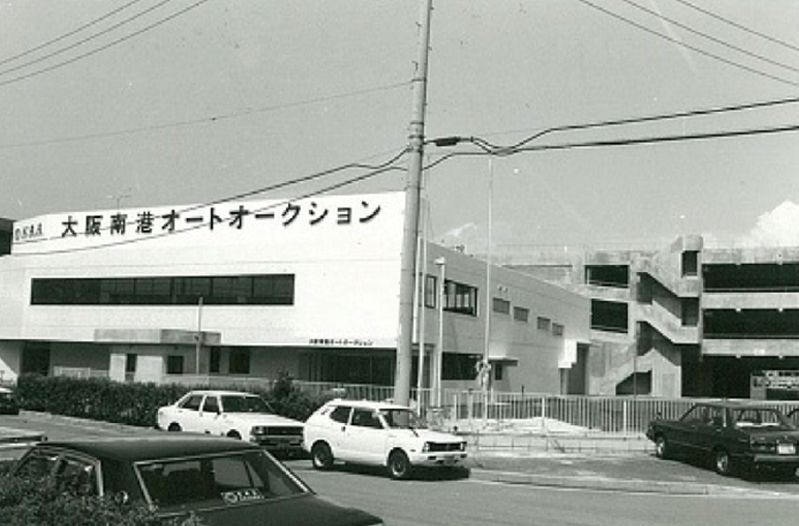
1984 POS system introduced, new venue established

Events in 1984

1/24 Takara can chu-hi launched
3/11 Nausicaä of the Valley of the Wind released
3/18 Glico-Morinaga incident
5/1 Toyo Kogyo Co., Ltd. changed its name to Mazda Motor Corporation
11/1 New banknotes: 10,000 yen: Yukichi Fukuzawa; 5,000 yen: Inazo Nitobe; 1,000 yen: Soseki Natsume

About six more years passed.

With the "vehicle parading method," if a vehicle had a problem, such as running out of gas or being immobile, the venue staff would have to push the car, disrupting the auction flow.
Furthermore, the internet was still not widespread, and the increase in registered members meant that the number of attendees exceeded the POS seats, making the expansion of POS seats an urgent need. However, some venues could not expand their POS seating due to the space required for parading vehicles.

Problems such as the shortage of POS seats, vehicles running out of gas, and contact or accidents between vehicles during parading within the venue were addressed by the development of video technology and the POS system. Exhibited cars were photographed in advance, and during the bidding, the images were displayed, allowing **two cars to be auctioned simultaneously**.
This shortened the time spent moving cars and reduced the need for manpower, significantly reducing the auction time.

However, since the internet was still not widespread at this point, the bidding was still limited to within the venue.

At Bay auc, traces of that era remain.
The main venue is designed like a theater so that parading vehicles could be seen, and there are vehicle entry/exit shutters behind the curtains on both sides at the front of the main venue.
To secure seating for attendees, POS seats were expanded onto the vehicle drive aisle and the second-floor lobby.
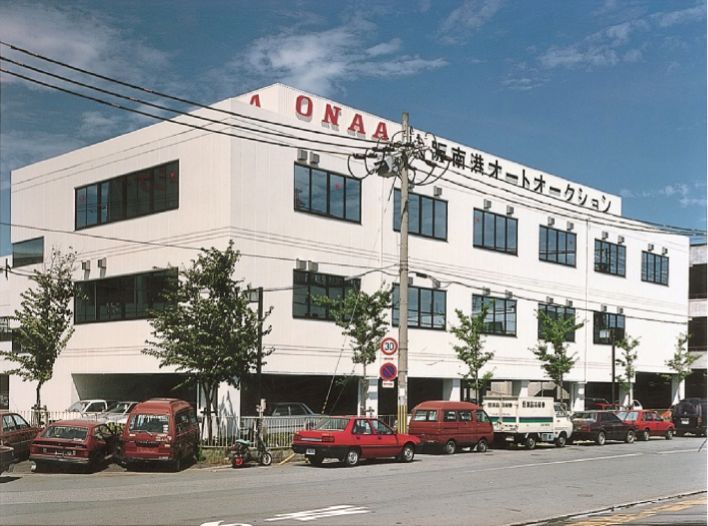
1992
Current administration building and sub-venue constructed. At the time, the 3rd floor was the cafeteria, and the 1st floor was the parking lot/passageway for the "vehicle parading method."
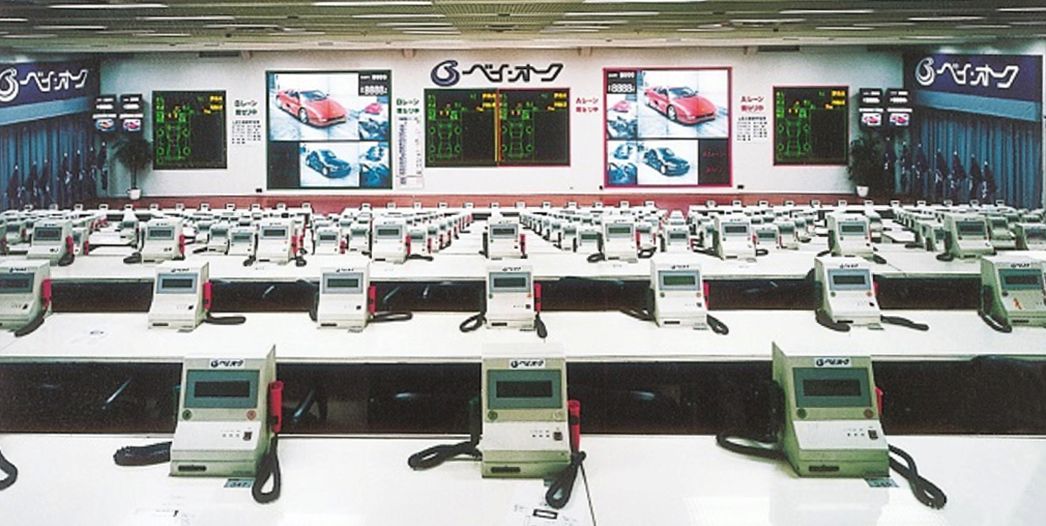
1998 Fully visual 2-lane auction (Photo from around 2000)

Events in 1998

2/7 Nagano Olympics opening

4/4 Antonio Inoki retired

4/5 Akashi Kaikyō Bridge opened

7/30 Obuchi Cabinet inaugurated

8/29 First iMac released

10/21 Game Boy released

With the spread of the internet in the 2000s, cooperation with other venues became possible, so Bay auc
worked hard to partner with many venues to allow people from all over Japan to successfully bid.

Initial online participation was limited to **bidding** (setting a desired maximum bid amount in advance), but with enhanced and stable communication,
**real-time bidding** became possible, increasing the number of people participating in the auction online without physically attending the venue.

2001 Real-time internet bidding started on Bay Net, our proprietary network.
2005 POS machines equipped with Bay Net were installed in all seats.

Events in 2001

4/2 Ichiro made his MLB debut in the US
4/26 First Koizumi Cabinet inaugurated
5/20 Japanese Wikipedia launched
9/11 September 11 attacks in the US
12/1 Birth of Princess Aiko
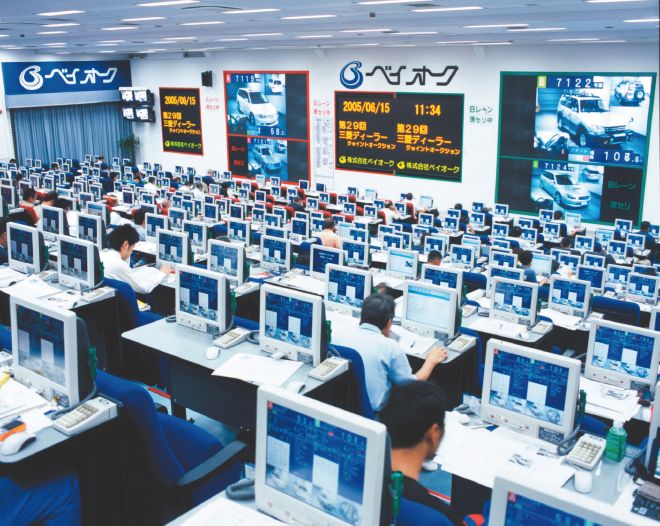
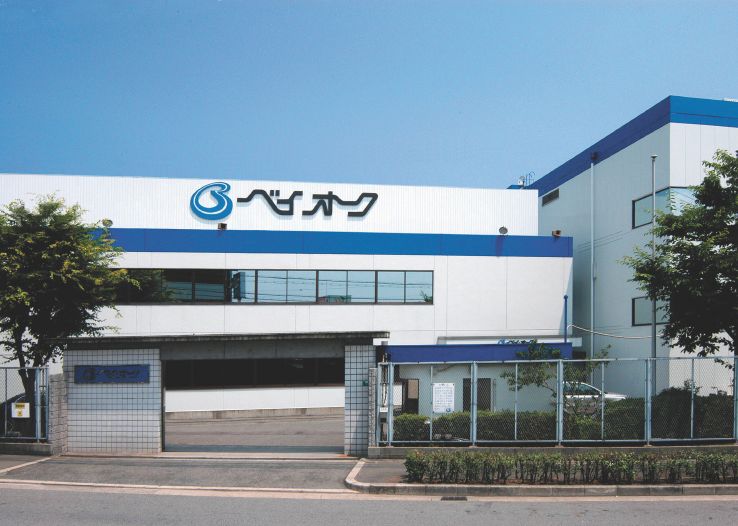
And now...
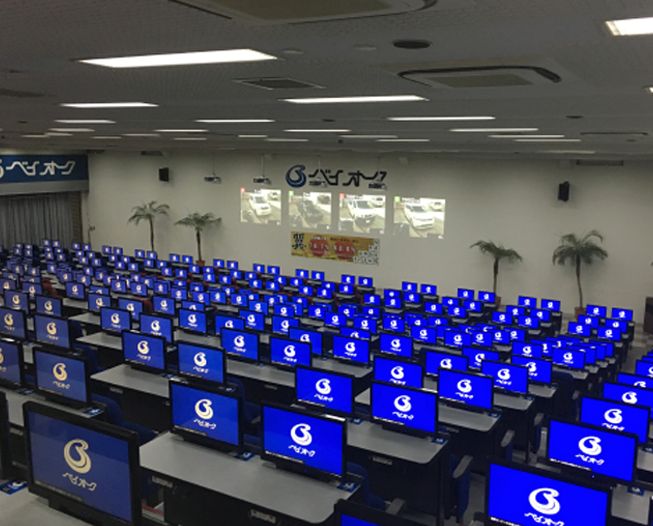
Our company conducts **4 simultaneous bidding lanes**.
The largest venue nationwide conducts **16 simultaneous bidding lanes**.


The layout of venues has also evolved, with designs like the **"around type"** (POS seats arranged around a central monitor). Each venue has unique and fascinating features.

Bay auc Theater Type

Types of Auction Venues

There are about 150 auction venues nationwide.
They are categorized into three types by company and two types by format.

By Company
Manufacturer Affiliated

The auction venue is managed primarily by a car manufacturer.
Mainly trade-in vehicles from new car sales are traded.

Corporate Affiliated

A wide variety of car makes and models are traded, without bias towards a specific manufacturer.
Each venue has unique features, such as "many imported cars" or "many mini vehicles."

JU Affiliated

JU is a nationwide organization for the used car sales industry.
It is a public organization authorized by the Minister of Economy, Trade and Industry and the Minister of Land, Infrastructure, Transport and Tourism,
and is the largest organization in Japan, consisting of approximately 10,000 used car dealers.
Each venue across the country has its own unique characteristics.

By Format
Physical Venue

Exhibited vehicles are gathered at the venue and appraised by the venue's inspectors.
Members can preview vehicles and exchange information with other members, experiencing the physical site.

Net Service

Net services do not have a physical venue.
Among net services, some connect AA venues with each other, while others send an appraiser from the service provider to the exhibiting dealer's location for appraisal, and the AA is conducted via images.

Bidding Flow

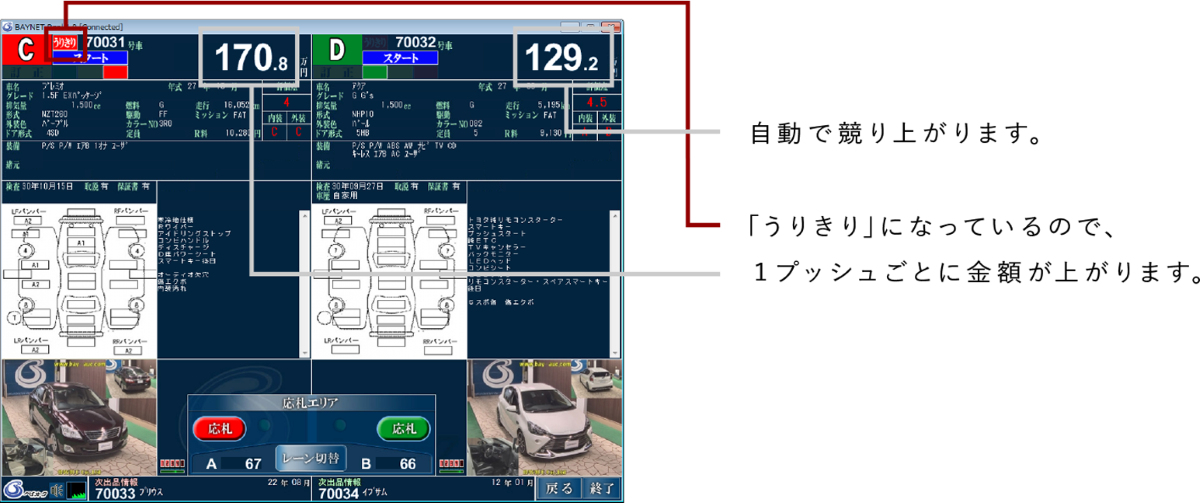
Bidding begins at a "**start price**" set by the exhibiting dealer and automatically increases (automatic bid up). A bidder who wants the car presses a button (**bids**) while watching the price increase automatically, signaling their interest to the exhibiting dealer.

When the bidding reaches the price the exhibiting dealer is willing to sell for, they signal "**sell-out**." After the sell-out is signaled, the price no longer increases automatically; it only increases by the amount each bidder bids. Ultimately, the bidder who places the highest bid successfully purchases the car.

If the bid does not reach the exhibiting dealer's desired price, it becomes an "**unsuccessful bid**" (no sale). The final bid amount in this situation is called the "**flow price**."

Bay auc official social media accounts
Get the latest information easily!